[Report begins]
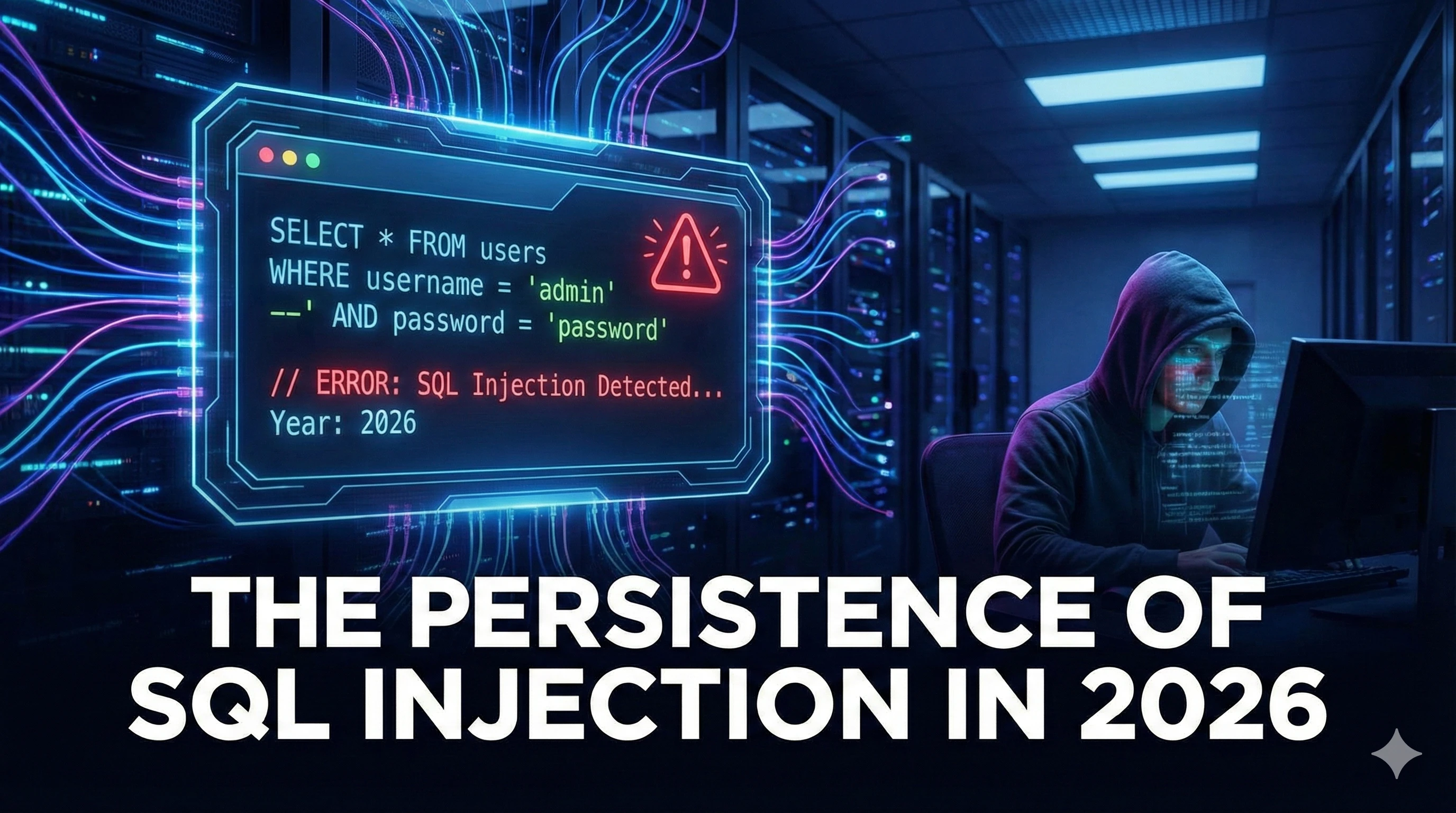
You think SQL injection is old news. You’re wrong. It’s hiding in your modern apps right now. The real damage isn’t just data theft. It’s total data destruction. Let’s talk about why this ancient plague is more dangerous than ever.
The history is clear. We’ve known about SQL injection since 1998. It topped the OWASP lists for decades. By 2021, injection flaws were still in 94% of apps. That’s the first anomaly. A problem with known fixes for over 25 years is still everywhere. Why? Complacency. We patched the obvious holes and called it a day.
But the attackers didn’t retire. They evolved. The second anomaly is in the ‘Ways to Exploit’. Look beyond basic ‘OR 1=1’. Modern attacks use blind SQL injection. No direct output. Just subtle logical probes. The server responds differently based on true or false queries. Attackers extract your entire database, one bit at a time, silently.
They’ve automated it. Tools now recover multiple bits per request. No failed attempts. This isn’t a noisy smash-and-grab. It’s a surgical, silent extraction. Your monitoring might never see it. Because the page just loads a little slower. Is that an attack or just high traffic? You won’t know until it’s too late.
Then there’s second-order SQL injection. This is the sleeper agent. The third anomaly. Your app safely escapes user input today. It stores it cleanly. But that malicious string sits in your database. Waiting. Weeks later, another internal process queries that data. It trusts its own database. It doesn’t escape again. The sleeper agent activates. The malicious SQL executes from within.
Your perimeter defense is useless. The attack came from inside the house. Stored data is trusted data. This flaw requires deep knowledge of app workflows. Automated scanners miss it. You need manual, expert review. How many teams have that luxury?
The root cause is simple. Mixing code and data. The solution is simple too. Parameterized statements. So why does it persist? The fourth anomaly is in the ‘Mitigation’ section itself. Look at the deprecated approaches. ‘String escaping is frail.’ Yet, legacy codebases are built on it. Quick fixes piled on top of quick fixes.
Worse, modern Object-Relational Mappers (ORMs) give a false sense of security. They promise protection. But they often allow raw SQL queries for ‘performance’. A developer drops down to raw SQL just once. A single concatenated string. The entire model’s safety is gone. The vulnerability is introduced.

Let’s talk about the new attack surface. Cloud-native apps. Microservices. APIs. They all talk to databases. The fifth anomaly. We’ve moved from monolithic web forms to a universe of API endpoints. Each one is a potential injection point. Modern apps have hundreds of these endpoints. The attack surface has exploded.
DevOps velocity pushes code daily. Security reviews can’t keep pace. A developer pulls a ‘quick fix’ from Stack Overflow. It uses string concatenation. It gets merged. It’s in production in an hour. The vulnerability is now live in your modern, cloud-based app. The very app you think is immune.
Now, let’s get to the real horror. Total data destruction. SQL injection isn’t just about reading data. It’s about deleting it. The ‘DROP TABLE’ command is the classic example. But it’s cruder now. Attackers are more sophisticated. They don’t just delete. They corrupt.

Imagine an injection that doesn’t steal your customer table. It subtly alters financial transaction records. It changes decimal places. It swaps account numbers. The integrity of your core data is destroyed. You can’t trust any of it. Your business logic fails. Your reports are fiction. Recovery? From what point?
Your last clean backup might be from days ago. All transactions since are poisoned. You face an impossible choice. Restore and lose days of real business. Or try to surgically repair corrupted records. A nightmare of forensic accounting. This is existential. Not a breach notification. A business continuity event.
Look at the 2023 MOVEit attacks. SQL injection was the initial vector. The Clop group didn’t just steal data. They installed a webshell. They had persistent access. They exfiltrated terabytes at their leisure from dozens of global giants. This wasn’t an amateur script. This was a professional, industrialized attack chain. Started with a simple, old-school flaw.

The 2024 FlyCASS vulnerability for the TSA is even more telling. A modern system for airline crew verification. Found to have SQL injection. This flaw could have added fake crew members to the database. The physical security implication is staggering. All from a basic, preventable coding error.
So what’s the solution? You know the textbook answers. Parameterized queries everywhere. Strict input validation. The principle of least privilege on database accounts. But that’s not enough. You need a new mindset.
First, assume injection is present. Hunt for it. Use dynamic and static analysis tools. But don’t stop there. Implement runtime application self-protection (RASP). Tools that sit inside your app and recognize injection patterns in real-time. They can block the query before it executes.

Second, treat your ORM with suspicion. Audit any use of raw SQL. Make it a policy violation. Enforce it in code reviews. Use linters that flag string concatenation near database drivers.
Third, embrace prepared statements relentlessly. There is no performance excuse anymore. Modern database drivers handle parameterized queries with efficiency. This is a non-negotiable coding standard.
Fourth, segment your databases. The ‘least privilege’ section is critical. Your user authentication service should use a database login that can only read the users table. Nothing else. Your reporting service should have read-only access to a replica. An injection in one microservice cannot hop to another.

Fifth, prepare for destruction. Have immutable, air-gapped backups. Test data restoration weekly. Know your Recovery Time Objective and Recovery Point Objective. If an attacker nukes your production DB, your response should be a well-rehearsed drill, not a panic.
SQL injection is the cockroach of cybersecurity. It survives nuclear winters of new tech stacks. It thrives in the shadows of your modern CI/CD pipeline. It’s not a legacy issue. It’s a here-and-now issue. The tools are better. The attacks are more sophisticated. The stakes are total data annihilation.
The anomaly is our continued belief that it’s solved. It’s not. It’s hiding in plain sight. In your latest API commit. In your shiny new microservice. Selling the solution starts with killing that complacency. Your data’ life depends on it.

>> Click Jacker