
OpenClaw Shatters the AI Myth: Open-Source Bots Are Smarter Than Closed Giants
Let’s get something straight.
For years, you’ve been sold a story. A myth, really. That the smartest, most capable AI is locked away in corporate vaults. That you need to pay a premium and beg for access to the “advanced” models. That intelligence is a product to be rationed.

What if that’s all wrong?
What if the real intelligence explosion isn’t happening behind closed doors at OpenAI or Anthropic… but in the open? On GitHub. In Discord channels. In the hands of developers from Silicon Valley to Shenzhen who aren’t asking for permission to innovate.
I’m talking about OpenClaw.
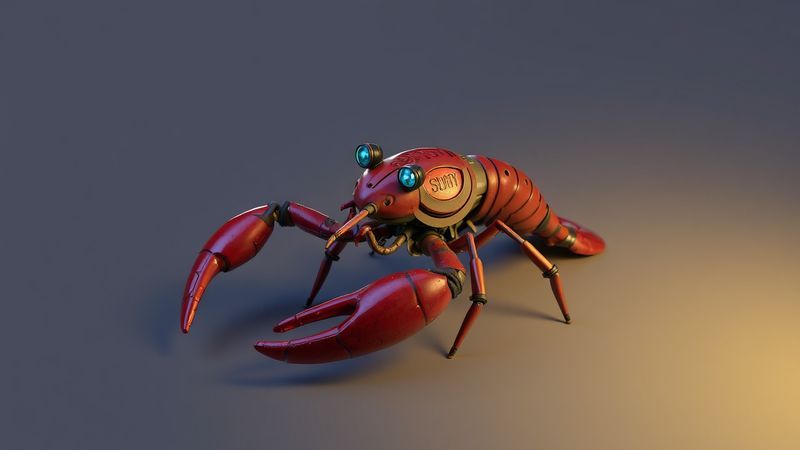
The free, open-source autonomous agent that doesn’t just *talk* about doing things. It actually *does* them. And its viral rise isn’t a fluke. It’s proof of a fundamental shift.
Here’s the truth they don’t want you to know.
The smartest AI isn’t the one with the most parameters. It’s the one that can actually use them.
The Anomaly: An AI That Actually Works
Picture this.
Late January 2026. An open-source project called Moltbot soon to be OpenClaw—starts blowing up. It’s not from a tech giant. It’s from an “Austrian vibe coder” named Peter Steinberger. Within weeks, it has over 145,000 stars on GitHub. 20,000 forks. Companies in the most competitive tech hubs on earth are adopting it. Why?
Because while the closed giants were busy crafting the perfect chat response, OpenClaw was built for one purpose: action. It’s an “AI that actually does things.” Steinberger’s own words. You don’t just chat with it. You install it locally. You connect it to your LLM of choice: Claude, GPT, DeepSeek. You talk to it on Signal, Telegram, or WhatsApp like you would a human assistant. And then you tell it what to do.
Book flights. Manage your calendar. Synthesize research. Automate workflows.
It stores your history locally. It learns. It adapts. It *executes*.
This is the first anomaly. The closed-source models are brilliant conversationalists. But they’re stuck in the chat box. OpenClaw smashes the box and connects intelligence to the real world.

And that’s only the beginning.
The Open Source Advantage: Where Intelligence Multiplies
Here’s where the “smarter” part kicks in.

A closed AI model is a monolith. It’s developed in secret. Updated on a schedule its corporate owner chooses. Its capabilities are what they decide to give you. OpenClaw is a protocol. A framework. It’s intelligence, democratized. Look what happened in China. Developers didn’t wait for an official version. They adapted OpenClaw to work seamlessly with China’s DeepSeek model and its domestic super-apps overnight.
That’s agility no closed system can match.
The viral Moltbook project a social network *for AIs*—emerged because the community saw the potential and built it. This is a ecosystem evolving at internet speed.

This is collective intelligence applied to intelligence itself.
Every developer who forks the repo, builds a new “skill,” or adapts it for a new platform is making the entire system smarter. The closed giants have a research team. OpenClaw has the world.
The result? An AI agent that isn’t frozen in time between quarterly updates. It’s living, breathing, and improving daily. It’s smarter because it’s not limited to one company’s roadmap. It’s limited only by the imagination of a global community of builders.
Which sounds more intelligent to you?
The “Security Risk” Smokescreen (And Why It’s Actually a Strength)
“But,” the critics sputter, “it’s a security risk!”

Of course they say that.
Platformer’s review mentions its complexity. Cisco’s team flagged a malicious third-party skill. One of OpenClaw’s own maintainers warned, “if you can’t understand how to run a command line, this is far too dangerous.”
Let me reframe that for you.

This is not a toy. This is a tool. And powerful tools require expertise.
The “security risks” exist precisely because OpenClaw is powerful enough to access your email, your calendar, your messaging. A spoon isn’t a security risk. A scalpel is. You don’t give a scalpel to a toddler. You give it to a surgeon. The open-source model turns a vulnerability into the ultimate strength: transparency.
When Cisco found a bad skill, the community knew *immediately*. It can be examined, patched, and warned against. Contrast that with a closed, proprietary system where a backdoor or data leak could fester unseen for months. The scrutiny is a feature, not a bug. It forces rigor. It demands that users understand the tool they’re wielding. This creates a more sophisticated, aware user base and a more resilient system.
The “danger” is the danger of true capability. The closed alternatives are “safer” because they are inherently less powerful, less connected, and less useful. They’ve traded capability for control.
OpenClaw trades control for ultimate capability.
And that’s a trade the future is making.

The Verdict Is In: The Future is Open, Agentic, and Autonomous
Technology commentary is already linking OpenClaw to the move toward autonomous AI systems that *act*. This isn’t a niche. It’s the next frontier. The myth was that intelligence comes from scale alone. From hoarding compute and data. The reality is that practical, actionable intelligence comes from flexibility, adaptability, and integration. It comes from being able to plug into the real world and change it.
OpenClaw, by being open, has become the standard interface for this new world. It’s the platform upon which the age of agentic AI is being built. The closed giants are now playing catch-up, trying to bolt “actions” onto their chat products. They’re building apps. OpenClaw is building an ecosystem.

So, let’s settle the debate.
Is an open-source bot smarter than a closed giant?
If “smart” means the ability to understand a nuanced query, the giants still have an edge. But if “smart” means the ability to *take that query, devise a plan, and execute it across the digital world*—to actually *get things done*—then the answer is obvious. The open-source agent is in a different league.

It’s smarter because it’s not just a brain in a jar.
It’s a brain with a thousand hands, built by a thousand engineers, connected to a thousand systems. The future isn’t locked away. It’s on GitHub. It’s free. And it’s already working. The only question left is: are you going to keep chatting with the past, or start building with the future?
The code is waiting.