The Real Breakthrough: How Neuralink is Already Restoring Sight and Movement, One Life at a Time
Let’s clear the static. When you hear “Neuralink,” what comes to mind? A sci-fi future where we download kung fu like Neo or communicate by thought alone. But what if the real story is happening now, and it’s not about reading minds, but about restoring movement to a paralyzed hand or sight to a blind eye? The most profound breakthrough in neuroscience isn't about creating superhumans; it's about healing.
Forget the hype. The real story of brain-computer interfaces (BCIs) isn't a speculative future of telepathy. It’s happening today in the quiet, determined recovery of people like Noland Arbaugh, the first human to receive a Neuralink implant. The real headline isn’t mind-reading; it’s movement, and sight, and a second chance for millions.
The Real-World Trial: From Lab to Life
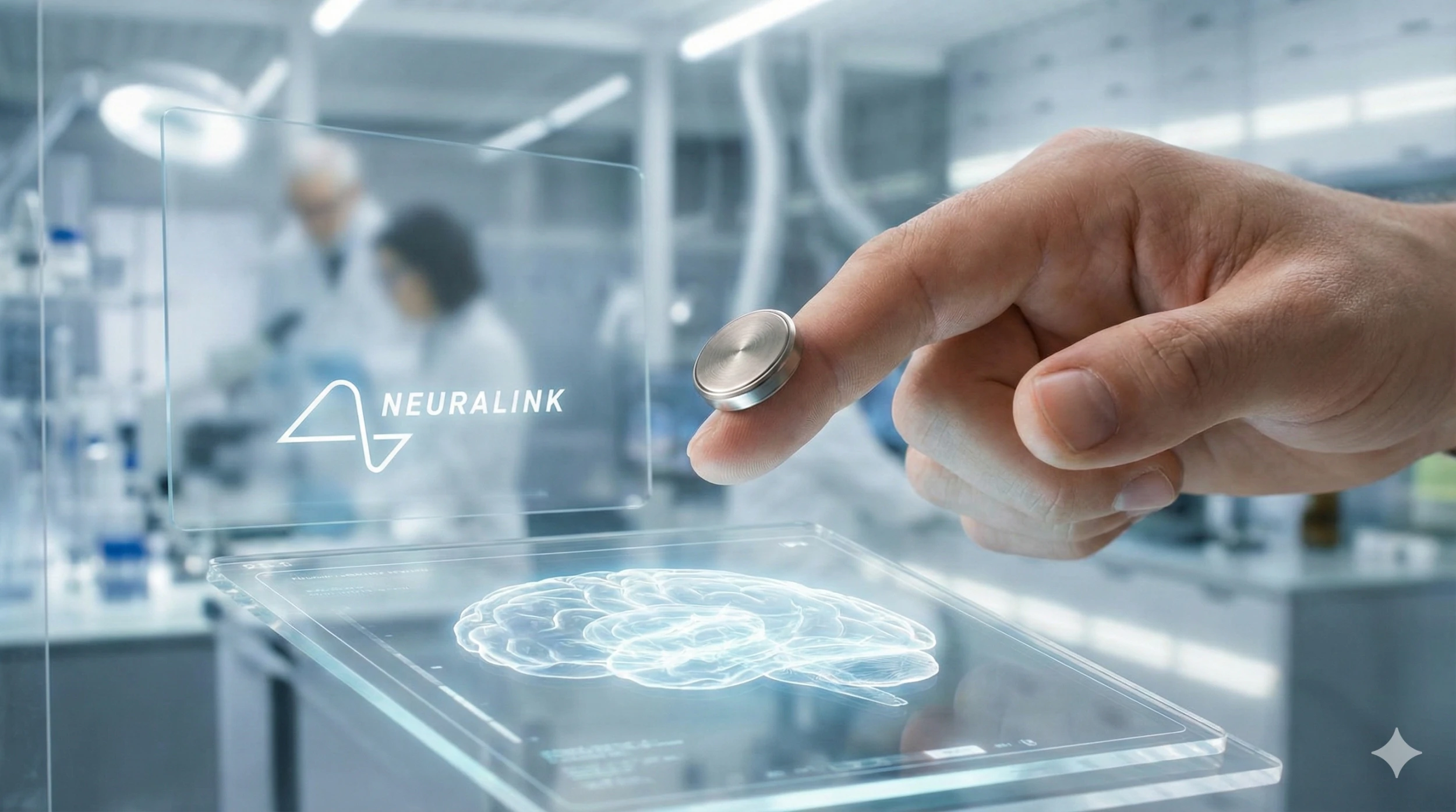
The proof is no longer confined to a lab. In September 2024, Neuralink’s “Blindsight” project received “breakthrough device” status from the FDA. This isn’t a theoretical concept. It’s a targeted, fast-tracked project to restore functional sight to the blind by feeding camera data directly to the visual cortex. We’re not talking about a vague research project; this is a designated “breakthrough” on the cusp of human trials.This is not science fiction. It’s a direct, FDA-backed pathway to restore a fundamental sense that was considered lost. And it’s not alone. In 2025, the University Health Network in Toronto performed Canada’s first Neuralink surgeries, implanting the device in patients with spinal cord injuries. These aren't experiments on lab rats; they are real-world procedures on real people with the explicit goal of restoring function.
The "Blindsight" project is the perfect example of the tangible good that is already within reach. It bypasses the damaged eye and optic nerve entirely, aiming to deliver visual data directly to the brain. For a person who has lived in darkness, the goal is not "perfect" sight, but the ability to navigate a room, recognize a loved one’s face, or see the first light in years. That’s the breakthrough. Not mind-reading, but sight.
The Movement: Restoring What Was Lost
The other side of this revolution is movement. For people like Noland Arbaugh, a C4/C5 quadriplegic, the Neuralink implant was not a gimmick; it was a gateway to independence. The initial results were staggering: a man who could not use his limbs was controlling a computer cursor with his thoughts. He could play chess, browse the web, and communicate in a way that wasn't possible before.The goal is not to create a super-gamer. It's to restore a baseline of autonomy. The technology records the intent to move and translates it to action—moving a cursor, a robotic arm, or, in the near future, the user’s own limbs through a neural bypass.
This is not a future promise. The "PRIME" study at the Barrow Neurological Institute is actively recruiting participants with quadriplegia from spinal cord injury or ALS. The goal isn't telepathy; it’s to "enable you to control a computer or a smartphone just by thinking." That is the breakthrough. For someone who can't move, that’s not a small thing. It’s everything.

The Elephant in the Room: Ethics, Animals, and the Pace of Progress
Let's be direct. The criticism is loud. Reports from 2022 and 2023 highlighted concerns about the well-being of animals in Neuralink’s early research, sparking federal investigations and legitimate ethical debate. These are not trivial concerns; they are serious. They forced a public conversation about the price of progress.But this is the critical point: that conversation is happening because there is progress to debate. The intense scrutiny is a direct result of the company pushing into unknown territory at a startling pace. While the animal testing practices warrant, and have received, intense scrutiny (with multiple federal and internal investigations), the outcome has been a demonstrable push for more rigorous science and transparency as human trials begin. The controversy isn't a reason to halt the work; it's proof that the work is real, it’s moving, and it has real stakes. The technology has now moved past that phase and into the realm of human application. The focus is now on the patients who are already using it.
The Future is a Restored Sense, Not a Superpower
The narrative is wrong. We are not talking about a future where we can download kung fu. We’re talking about a man playing chess with his father for the first time in years. We’re talking about a person with ALS sending a text message using only their thoughts. We’re talking about the potential for someone who has never seen their child’s face to see it for the first time.
This is the true breakthrough that is already here. It's not about a "social credit score" or a hive mind. It's about using the most sophisticated technology on the planet to solve the most human of problems: a lost connection. It's about giving a person with a spinal cord injury the ability to control a robotic arm to feed themselves. It's about translating the dream of a person with ALS into a spoken sentence. It's about restoring a sense, and with it, a fundamental piece of a person's life.
The real story of Neuralink and the broader BCI field is not a dystopian nightmare. It is a complex, difficult, and sometimes messy human endeavor to heal. The breakthrough isn't on a flashy keynote stage. It’s in the quiet moments of a patient regaining a sliver of what was lost. The real story isn’t about the future. It’s happening now.