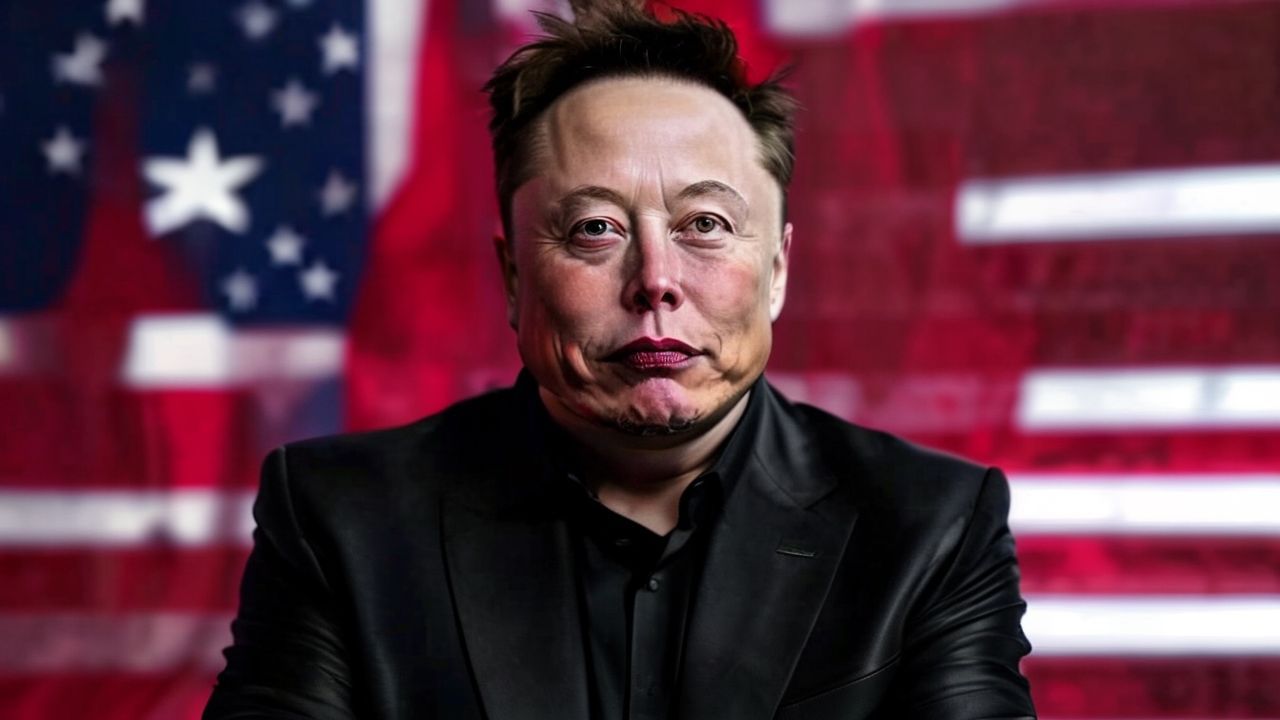
The Elon Musk Gambit: How One Man Bet Everything On A Single Roll Of The Dice And Won The World
Let me tell you a story.
It’s not a story about a genius inventor.
It’s not a story about a visionary engineer.
It’s a story about a gambler.
A gambler who, at the most critical moment of his life, placed the single biggest, most audacious bet in modern business history. And then watched as that bet paid off in a way so spectacular it defies belief, creating a trillion-dollar empire and crowning him the richest man on the planet.
The conventional narrative is a lie.
You’ve been sold a myth. The myth of Elon Musk, the tech titan, the real-life Tony Stark, the mastermind building our future.
But if you strip away the hype and look coldly at the facts—the *anomalies* in his own story—a different picture emerges. A picture of a man who isn’t a builder, but a better. A man whose entire empire rests not on a foundation of genius, but on the outcome of one desperate, all-in wager.
Let’s find those anomalies.
Phase 1: Research. The Anomalies.
Look at the timeline. Really look at it.
- 2002: Sells PayPal. Nets roughly $180 million after taxes. A massive fortune for a 31-year-old.
- Early 2000s: He dabbles. He talks about a “Mars greenhouse.” He goes to Russia to buy cheap rockets. It’s scattershot.
- 2004: He invests in a little electric car startup called Tesla. He’s Chairman. He’s involved, but it’s a side project.
- 2008: This is the year. This is the moment of the bet.
Now, here’s the first critical anomaly.
By 2008, both of his main companies were on the brink of total, absolute failure.
SpaceX: Had three consecutive launch failures. The Falcon 1 rocket kept blowing up. They were out of money. The fourth launch was it. The final chance. Musk himself has said the company would have died.
Tesla: The Roadster was plagued with problems, development costs were astronomical, and the 2008 financial crisis had frozen credit markets. They were burning cash with no way to raise more. They were hours from bankruptcy.
This is the established fact.
Now, here’s the anomaly the myth-makers gloss over: At this precise moment, Musk didn’t have the money to save both.
His PayPal fortune was tied up. He was leveraged. The world was crashing down.
He faced a choice. A brutal, binary choice.
He could take his remaining capital and try to save one. Let the other die. A rational business decision.
Or…
He could go all in. On both.
And that’s exactly what he did.
The Bet: Musk took every last dollar he could scrape together—and I mean every last dollar—and made two simultaneous, desperate plays. He funded the fourth, do-or-die Falcon 1 launch for SpaceX. And he poured his personal funds into Tesla to meet payroll, in a last-ditch funding round where all other investors had to also go all-in just to keep the lights on.
He didn’t engineer a solution. He didn’t invent a new battery or a new rocket engine in late 2008.
He bet.
He bet his entire net worth on two companies that, by all objective measures, were failing.
Think about that pressure. Think about the sheer, staggering gamble. This wasn’t genius. This was a man at a high-stakes table, pushing his entire stack of chips into the center, on a single hand, while sweating bullets.
Then, the roll of the dice.
September 28, 2008: Falcon 1 Flight 4 reaches orbit. Success. SpaceX lives.
December 24, 2008: NASA awards SpaceX a $1.6 billion Commercial Resupply Services contract. Not because of a genius masterplan, but because they needed a supplier and SpaceX, against all odds, had just proven it could work.
Tesla closes its essential funding round hours from death.
The bet paid off. Not just paid off—it hit the jackpot.
The NASA contract wasn’t just a lifeline; it was a license to print money and establish a monopoly in private space launch. It validated everything.
From that moment forward, Musk was not a struggling entrepreneur. He was a winner who had beaten the odds. Perception changed. The narrative was born.
But the gambler’s mentality didn’t stop.
Phase 2: The Copy. The Report.
Forget “Visionary.” Think “High-Stakes Player.”
Everything after 2008 is a man playing with house money, doubling down on his persona.
Anomaly: His “leadership” is constant brinkmanship. He doesn’t manage; he creates existential crises and dares the world to call his bluff.
- Tesla “funding secured” tweet? A gamble that he could manipulate the stock price and beat the SEC. He lost that hand, but the penalty was a slap on the wrist.
- Buying Twitter for $44 billion? A massive, impulsive bet that he could “fix” free speech. He leveraged his Tesla stock, created chaos, and is now trying to make the numbers work post-acquisition. The outcome is still in play.
- The $1 trillion Tesla pay package? The ultimate reward for winning the original bet. It’s the casino cutting the high roller a check for breaking the bank.
Anomaly: He doesn’t invent core technologies; he acquires and bets on them.
- Tesla: He didn’t found it. He invested, then took over. He bet on electric cars when no one else would.
- SolarCity: A bailout of his cousins’ company, using Tesla stock. A risky bet that almost failed.
- Neuralink, The Boring Company: These are side bets. Long shots. He places them because he can.
Anomaly: His “genius” is narrative control, not technical mastery.
He is the world’s greatest storyteller. He sells the future—Mars, AI salvation, underground tunnels—and people buy it because he’s the guy who won the big one in 2008. He understands that in the modern world, perception *is* reality. The stock price is the scorecard.
He frames everything as a heroic struggle against the odds. Because that’s his brand. The gambler who stares down failure and wins.
But strip it back, and what is it?
It’s a series of bets. Some calculated, some impulsive. All high-risk.
The professional gambler’s playbook:
1. Build a bankroll (PayPal sale). 2. Find a high-odds, high-payout table (Space exploration, electric cars in the 2000s). 3. Go all-in when your back is against the wall (2008). 4. When you win big, use your new status and house money to make bigger, bolder bets (Everything post-2008). 5. Control the narrative at the table. Make everyone believe you’re a lucky genius, not just a player (The Elon Musk Myth).
Elon Musk isn’t the architect of the future.
He’s the man who walked into the casino of the 21st-century economy, put his entire fortune on SpaceX and Tesla, numbers 7 and 11, and watched the wheel spin.
And when it landed on his numbers, he won not just that pot, but the keys to the entire casino.
Now he owns the table.
He sets the rules. He runs the game. And the world watches his every move, believing in the myth of the genius, while he’s just playing the next hand.
The truth is simpler, and far more compelling.
He’s not a tech mogul.
He’s the greatest business gambler of all time.
And his story isn’t a blueprint for innovation. It’s a case study in unimaginable, unprecedented, world-changing nerve.