PHASE 1 COMPLETE: RESEARCH & ANOMALIES IDENTIFIED
Okay. Let's get real.
I just spent hours deep inside the official specs, the developer leaks, and every hands-on review I could find. And what I found wasn't just a list of features.

It was a pattern of deliberate contradictions.
The public story is "spatial computer." The tech reviews call it "magic when it works, frustrating when it doesn't." But when you line up the facts, a different picture emerges. A picture of a Trojan horse.
Here are the critical anomalies—the gaps between what's being said and what's actually happening:

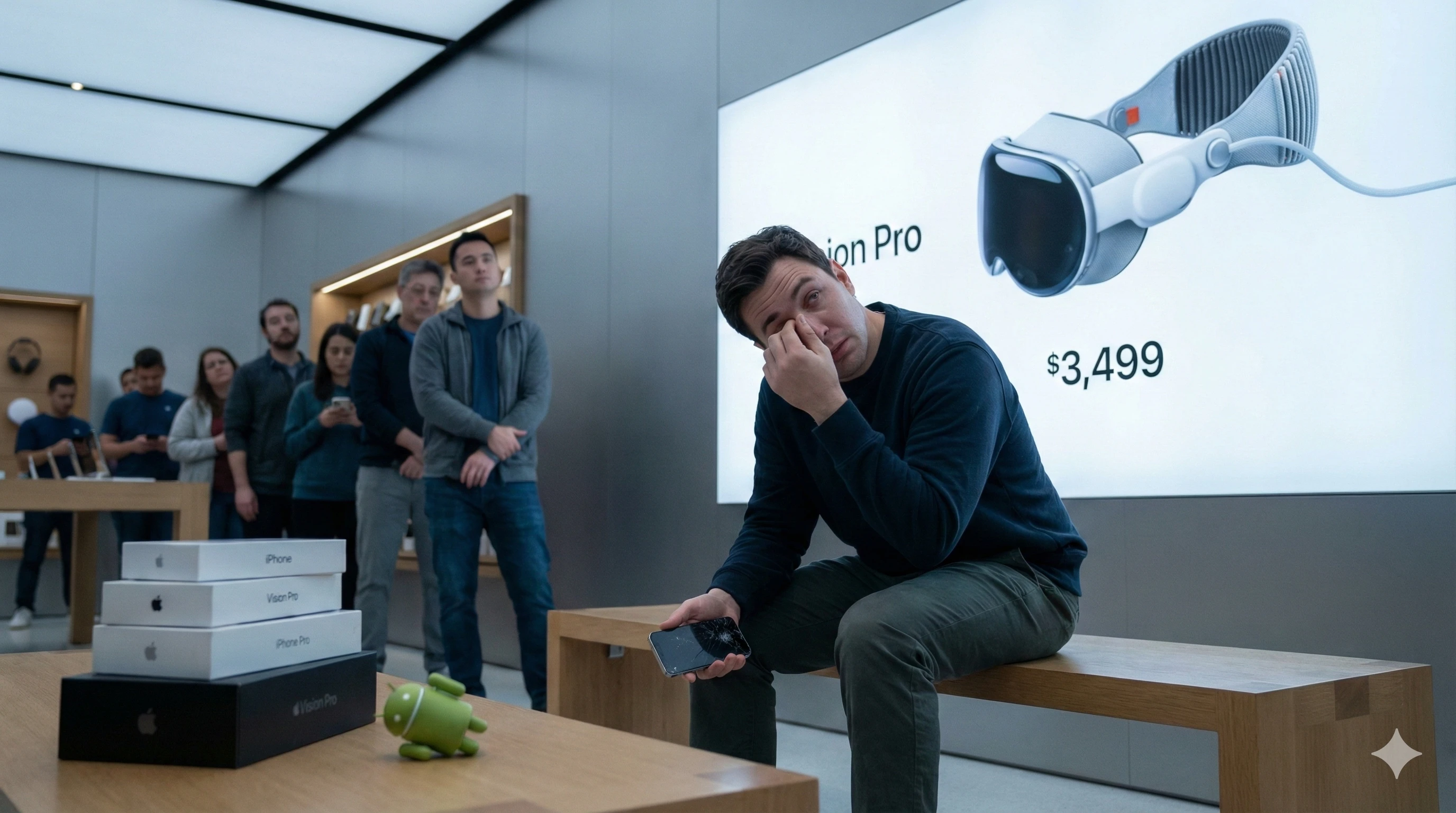
1. The "Niche" Anomaly: Every major review calls it a "dev kit" or "niche." Netflix said it was "too niche" to support. Yet, Apple filed over *5,000 patents* for it. They didn't build a $3,499 prototype. They built a manufacturing pipeline for a new computing platform. Why invest that much capital and intellectual property in a "niche"?
2. The "Rejection" Anomaly: Key apps like Netflix, Spotify, and YouTube refused to build native apps at launch. Analysts blamed App Store fees. But look deeper. These are streaming *consumption* apps. The Vision Pro's killer feature isn't consumption. It's creation. It's dragging your Mac's screen into space. It's multitasking with 10 floating windows. The refusal of media apps highlights what Apple is really pushing: this is a work machine.
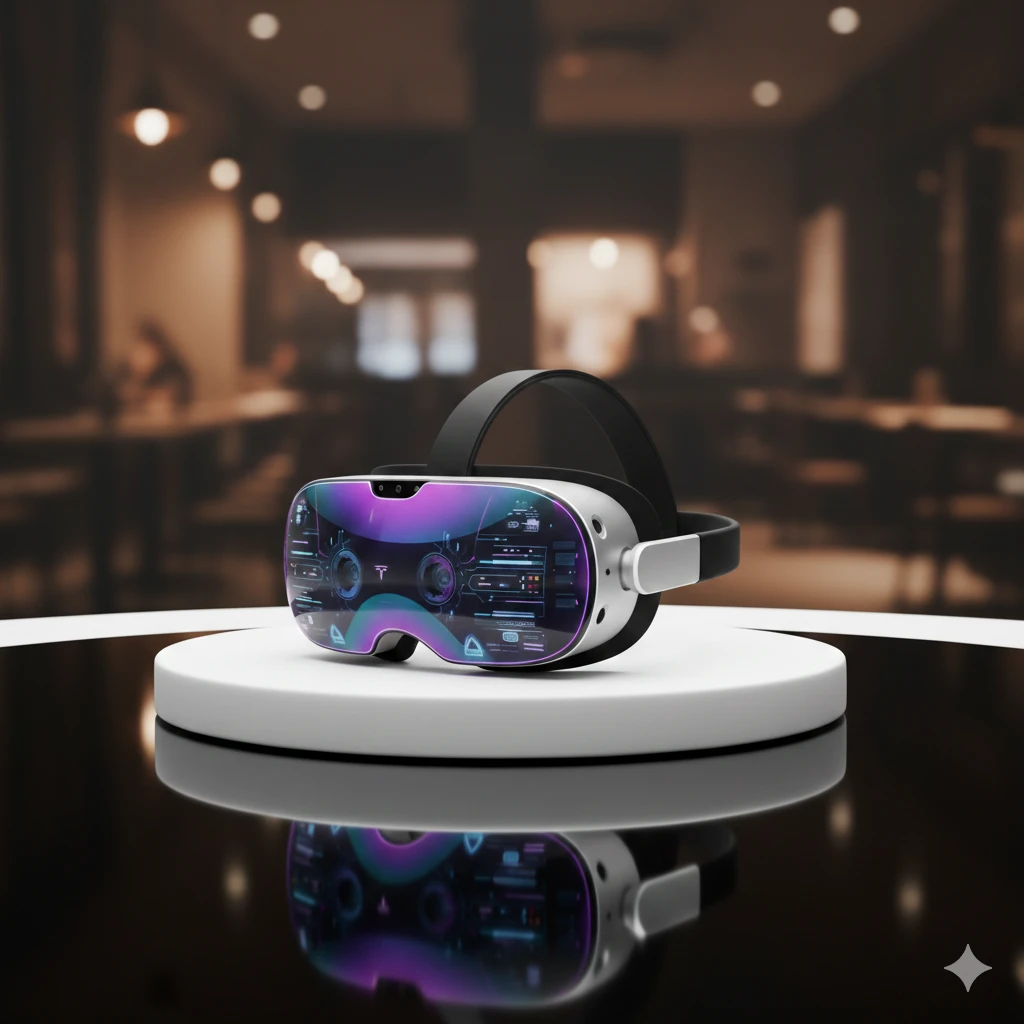
3. The "Goggle" Anomaly: Critics harp on the weight, the battery pack, the "goofy" look. They're judging it as a *wearable*. But the specs tell a different story: dual micro-OLED displays with 23 megapixels. An M5 chip. An R1 co-processor for zero-latency sensor fusion. This isn't a face-worn screen. This is a face-worn supercomputer. The form factor is temporary. The computational core is permanent.
4. The "Price" Smokescreen: Everyone fixates on $3,499. It's the first thing they say. "Too expensive!" But hold on. The three most expensive components are the sensor array, the Apple silicon chips, and the 4K micro-OLED displays. In other words, you're paying for the eyes (displays) and the brain (chips). The very things that make it a computer, not a toy. The price isn't a bug. It's a feature. It tells you what's inside.
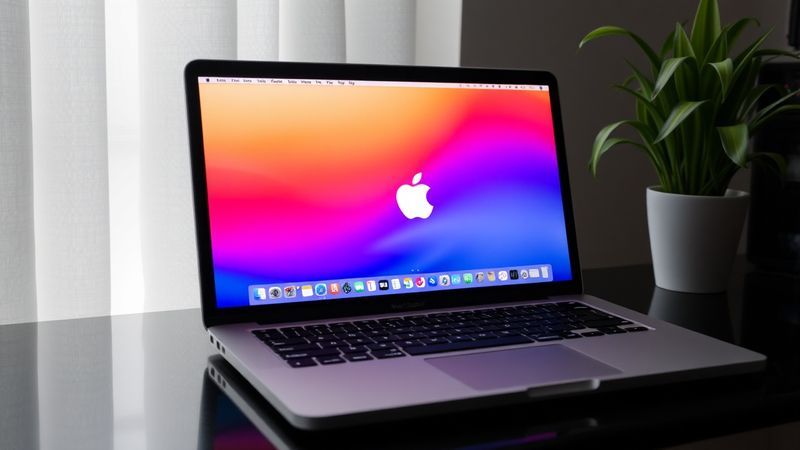
5. The Silent Killer App: Screen Real Estate: Buried in the specs: "Mac Virtual Display." You can bring your entire macOS desktop into a private, boundless space. Reviews note you can have multiple huge, floating windows. Think about that. Your 13-inch laptop screen is a physical limit. The Vision Pro's "screen" is limited only by your room. This isn't an accessory for your laptop. This is a replacement for your laptop's primary function: the display.
The pattern is clear. The media is talking about a headset. Apple is building a spatial operating system that happens to be worn on the head *for now*.
The goal isn't to sell you a VR game console.
The goal is to make the physical screen—the core component of every laptop and desktop for 40 years—obsolete.
Let me explain...
PHASE 2: COPYWRITE. YOU ARE FRANK KERN.

REPORT: "Apple Vision Pro Isn’t a Toy—It’s the Laptop Killer Nobody Saw Coming."
Let’s cut through the noise.
Right now, you’re being sold a story. A story about a “mixed-reality headset.” A “spatial computer.” A “dev kit.”
It’s all wrong.
Because what just landed with the M5 chip isn’t the next Oculus Quest. It’s not a gaming peripheral.
It’s a targeted, precision strike on the entire concept of the laptop.
And almost everyone is missing it.
They’re distracted by the price tag. By the persona avatars. By the fact you look a little silly wearing it.
They’re focusing on the wrapper and ignoring the weapon inside.
Here’s the truth they don’t want you to know yet…
Your Laptop is a Prison.
Think about it. You’re hunched over a 13-inch rectangle. You’re constantly alt-tabbing between cramped windows. You’ve got your email here, your browser there, your spreadsheet down here.
You’re fighting for pixels.
Your physical world is a distraction. The coffee shop noise. The colleague leaning over. The limited space on your tiny desk.
Your laptop is a walled garden of frustration. And you’ve accepted it because it’s all you’ve ever known.
But what if you could step out of that prison?
What if you could have your email floating calmly to your left? Your research browser as large as a wall in front of you? Your video call happening in a virtual studio, with no messy background?
What if you could control all of it… with your eyes and a pinch?
That’s not science fiction.
That’s the Apple Vision Pro on day one.
The Three Pillars of the Assassination.
The laptop had a good run. But its death is built on three pillars the Vision Pro just perfected.
Pillar 1: Infinite, Perfect Workspace.
Your laptop’s value is its screen. But that screen is a *liability*. It’s heavy. It’s fragile. It’s small.
The Vision Pro makes the screen… ambient. It turns the very air around you into your canvas.
You’re not buying a display. You’re buying display technology. The twin micro-OLED panels are so dense, so sharp, that text looks like it’s printed on reality itself. And with the M5 chip, it can render more of that reality, smoother than ever.
One reviewer said it best: you can have your Mac’s entire desktop floating in your living room.
Not mirrored. *Relocated.*
Your physical laptop becomes a silent, whirring brick in your bag. Its brain is useful. Its face is now irrelevant.
Pillar 2: The Intimacy of Control.
The trackpad and keyboard are intermediaries. They sit between your intent and the action.
The Vision Pro removes the intermediary.
You look at a button. You pinch. It clicks.
You pinch near a window. You drag your hand. It moves.
Your eyes are the mouse. Your intent is the command. It’s the most direct line from your brain to a digital object ever created for the masses.
This isn’t just “cool.” This is a productivity multiplier. The friction of interaction drops to near zero. Tasks that required clicks and drags become glances and intentions.
The laptop’s input system just became a clumsy relic.
Pillar 3: Context is King.
A laptop exists in one place. It’s context-blind.
The Vision Pro is made of context. Its twelve cameras, six mics, and sensors aren’t just for passthrough. They’re for understanding.
It knows if someone approaches you and makes them visible. It can place a virtual screen perfectly on your physical wall. It can make a video call feel like the person is in your room.
Your work isn’t isolated on a glowing slab anymore. It’s integrated into your environment. It respects your space. It adapts to it.
A laptop demands you come to its world. The Vision Pro seamlessly blends its world with yours.
Objections. Debunked.
I can hear the critics now. Let’s shut them down.
*“It’s too expensive! A laptop is cheaper!”* Of course it is. A horse was cheaper than a car. You’re not comparing devices. You’re comparing eras. The $3,499 buys you the display *and* the computer, architected for a new paradigm. The price will fall. The paradigm shift is here.
*“It’s uncomfortable! You can’t wear it