Contrary to Popular Belief, Apple's Biggest Threat Isn't Android—It's Consumer Fatigue with Premium Pricing
A Report by Jamie Lawrence
We need to talk about Apple. The narrative is tired. For over a decade, the tech commentariat has obsessed over the "iPhone vs. Android" battle. Market share percentages are dissected. Feature wars are analyzed. But what if everyone is focused on the wrong war?

Let me explain. The real existential threat to Apple’s empire isn’t the flexibility of a Samsung phone or the affordability of a Google Pixel. It’s a slow, silent rebellion. A gathering storm of consumer fatigue with relentless premium pricing. This isn't speculation. It’s a lesson written in Apple’s own history, a cycle they’ve lived—and nearly died from—before.
But here's the thing: we’ve seen this movie. And Apple has played the starring role in its own downfall.
The Ghost of Pricing Strategies Past
To understand the future, you must confront the past. Apple’s history is not a straight line of unbroken triumph. It’s a rollercoaster where the steepest drops correlate directly with premium pricing strategies that alienated the core user.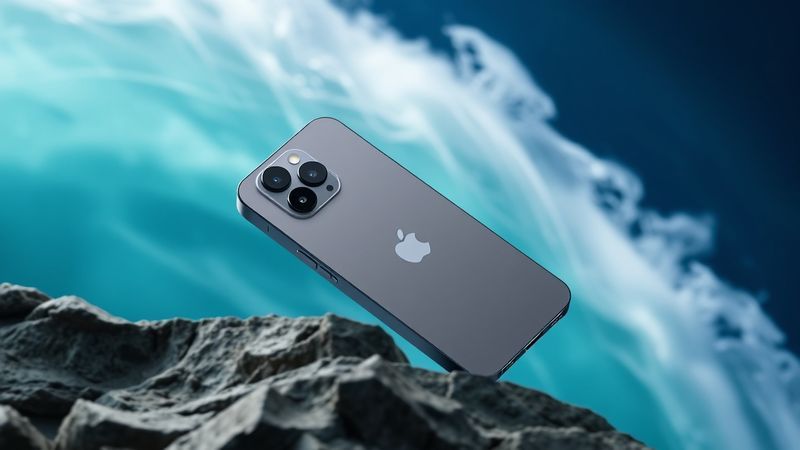
Let’s rewind. The Macintosh launched in 1984 to fanfare, but sales tapered off dramatically after three months. Why? Critics panned its high price of $2,495 (over $7,700 today) for slow performance. Steve Jobs had prioritized margins over market fit. This was the first crack.
Now, fast forward to the late 1980s. Under John Sculley and Jean-Louis Gassée, Apple codified the "high-right policy." The slogan was "fifty-five or die," targeting 55% profit margins. They focused on the high-end desktop publishing market, selling power users ever-more expensive machines.
Here’s the kicker: it worked. Until it didn’t.

The Inevitable Backfire
The high-right policy was a masterpiece of short-term financial engineering. And a blueprint for long-term disaster. By the late 80s, cheaper IBM PC clones gained desktop publishing functionality. Apple’s strategy backfired spectacularly. They lost their dominant market position and, crucially, estranged their original consumer base.Why? Because those consumers could no longer afford Apple products. The Christmas of 1989 saw declining sales for the first time ever. The stock dropped 20%. This wasn't a competitor problem. It was a self-inflicted pricing problem.
Let’s be clear. This is the anomaly we must focus on. Apple has repeatedly proven that a walled garden only remains lush if people can afford the gate key.
The Near-Death Experience
The 1990s are a case study in the consequences of this fatigue. The company scrambled. They introduced confusing arrays of brands—Quadra, Centris, Performa—to mask the core issue. Consumer confusion reigned. Failed products like the Newton and Pippin piled up.Most damning? By 1996, Apple was weeks from bankruptcy. The clone program, intended to expand reach, was cannibalizing high-margin sales. The brand was sullied. Why? Because Microsoft Windows delivered "good enough" on inexpensive PCs. Apple was still selling a rich, expensive experience to a shrinking pool of loyalists.
The threat wasn't that Windows was better. It was that it was affordable.
The Jobsian Correction: A Lesson Briefly Learned
Steve Jobs’s return in 1997 is often framed as a design revolution. But it was, first and foremost, a pricing and focus correction. He immediately canceled 70% of models. He pared down to the core. He ended the clone program.Then, he introduced the iMac in 1998. It was revolutionary in design, yes. But critically, it was *accessible*. It sold 800,000 units in five months. It reconnected with consumers who had been priced out. The strategy was simple: a small product line focused on quality and innovation at a palatable price point.
This is the crucial part. The iPod and iTunes Store succeeded not just because they were elegant, but because they offered incredible value. The iPhone’s initial success was built on a carrier-subsidized model that hid its true cost from consumers.
But something shifted.
The Slow Creep of the "Pro" Premium
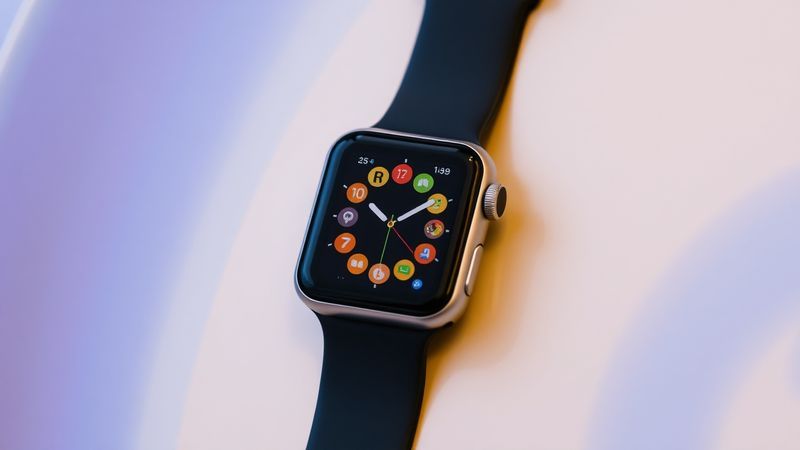
The 2010s saw Apple’s market cap soar. The iPhone became a profit engine. And a new strategy emerged: the relentless segmentation and "pro-ification" of everything. The iPhone line splintered. "Pro" and "Pro Max" tiers arrived, pushing prices toward—and now past—the $1,000 barrier.The MacBook Air, once the poster child for accessible premium computing, saw its base price stagnate and creep upward. The MacBook Pro became a machine squarely for professionals, with prices to match. The Apple Watch Edition flirted with solid gold.

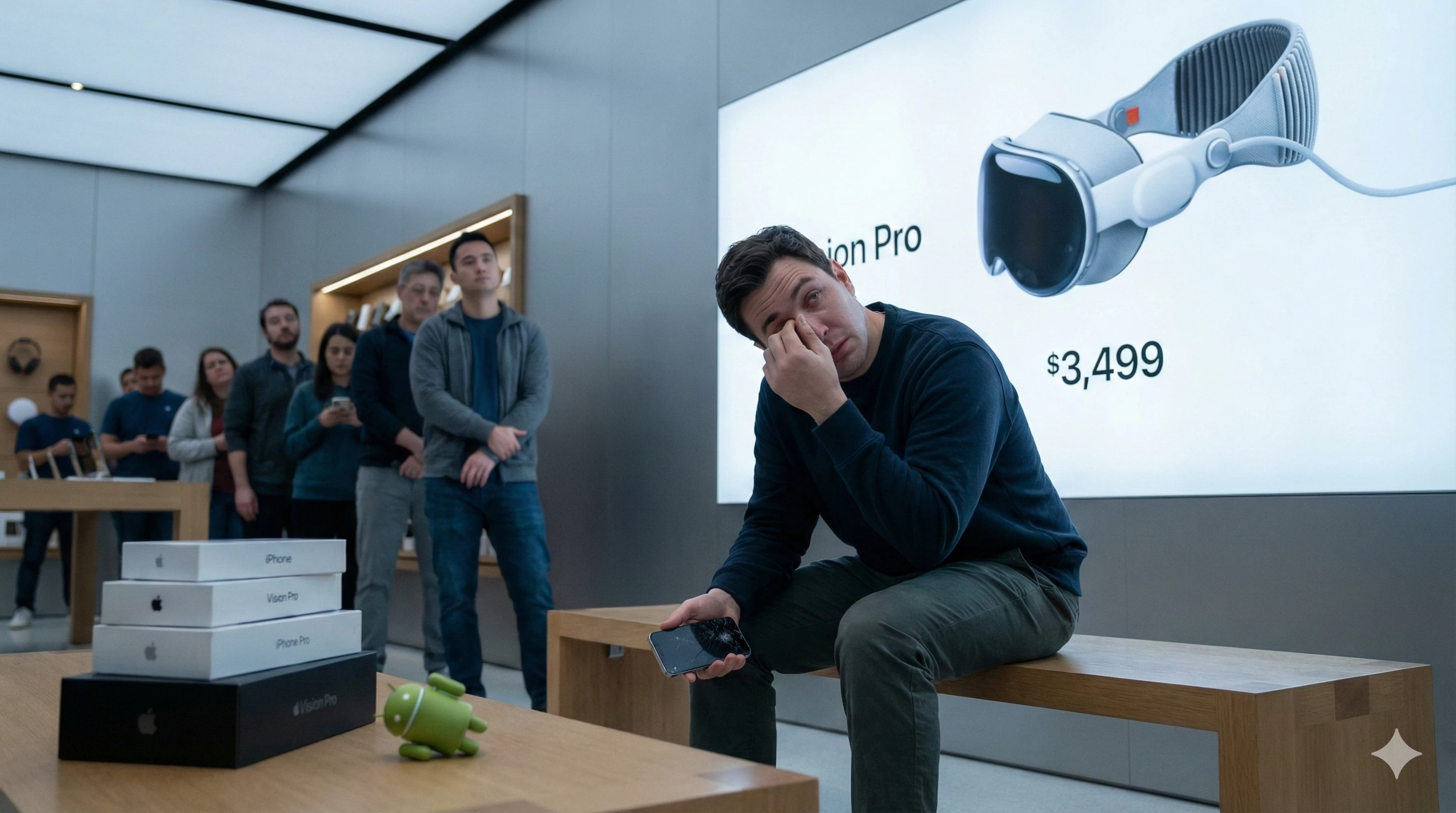
Here’s the problem. The "Apple Tax" is no longer a slight premium for seamless integration. It’s a chasm. The base iPhone 15 is $799. The fully loaded iPhone 15 Pro Max is $1,599. The Vision Pro is $3,499.
Ask yourself this: how many consumers are being silently estranged today, just as they were in 1989?
The Modern Perfect Storm
Today’s market dynamics make historical parallels terrifying. We are not in the booming 80s or 90s. We’re in an era of persistent inflation, economic uncertainty, and stretched household budgets. Consumer sensitivity to price is at a decade high.
Meanwhile, the competition isn’t standing still. Android’s threat was never its OS superiority. It was the *spectrum of choice*. You can buy a perfectly competent Android phone for $300. Or a folding flagship for $1,800. The value proposition is clear at every tier.
But Apple’s value proposition is blurring. For the average consumer, is an iPhone 15 Pro Max *twice as good* as a $799 phone? Is a MacBook Pro *three times better* than a comparable Windows laptop? The calculus is breaking down.
And let’s talk about innovation. The annual iPhone update cycle is now incremental. The "wow" factor that justified a premium is harder to summon. When the biggest annual news is a new color or a slightly better camera, pricing fatigue sets in faster.
The Android Distraction: A Sleight of Hand
Focusing on Android vs. iOS market share is a distraction. It’s a battle Apple can afford to lose in volume if it wins in profit. And it has been winning that profit battle for years.But that victory depends on a critical assumption: that a large, loyal base will consistently pay ever-higher prices for marginal improvements. What happens when that base starts calculating cost-per-feature? What happens when they hold onto devices for three, four, or five years?
The data is already whispering. Upgrading cycles are lengthening. The second-hand iPhone market is booming. These are the early warning signs of consumer fatigue. Not defection to Android, but disengagement from the upgrade treadmill.
The Vision Pro: A Cautionary Tale in Real Time
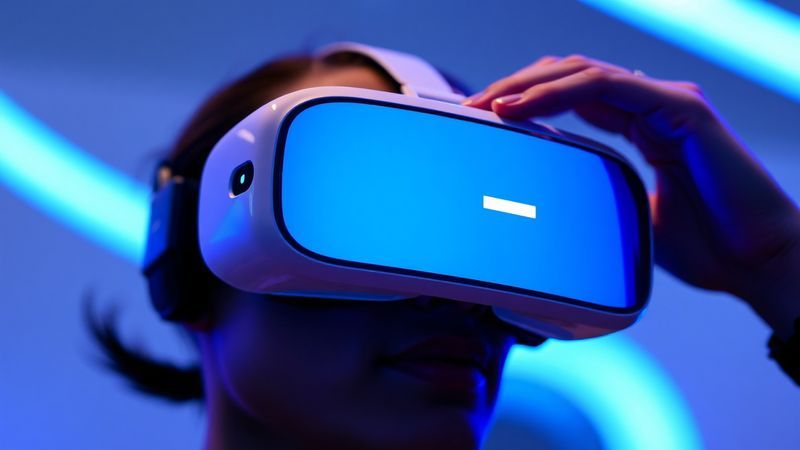
Look no further than the Vision Pro. A technological marvel. Also a $3,499 niche product with limited appeal. It is the purest expression of the modern Apple premium ethos: build something incredible and charge a fortune for it.It may succeed in a niche. But it cannot drive growth. It is a symbol of a company optimizing for margin at the very high end, potentially at the expense of the broad middle that built its empire. It’s the "fifty-five or die" spirit, resurrected for the spatial computing age.
The Path Forward: Remembering 1997
The solution is in Apple’s own playbook. The lesson from 1997 isn't just "make great products." It's "make great products that people can *reasonably afford*." It’s about balancing prestige with accessibility.
Apple needs a bold correction. Not toward cheapness, but toward undeniable value. It needs a new iMac moment—a category-defining product that resets value expectations. It needs to show that "Apple innovation" doesn't automatically mean "Apple luxury tax."
Could it be a truly compelling mid-tier iPhone? A redesigned, aggressively priced MacBook Air? A subscription model that softens hardware costs? The specifics